Can You Use ChatGPT for Construction Work?
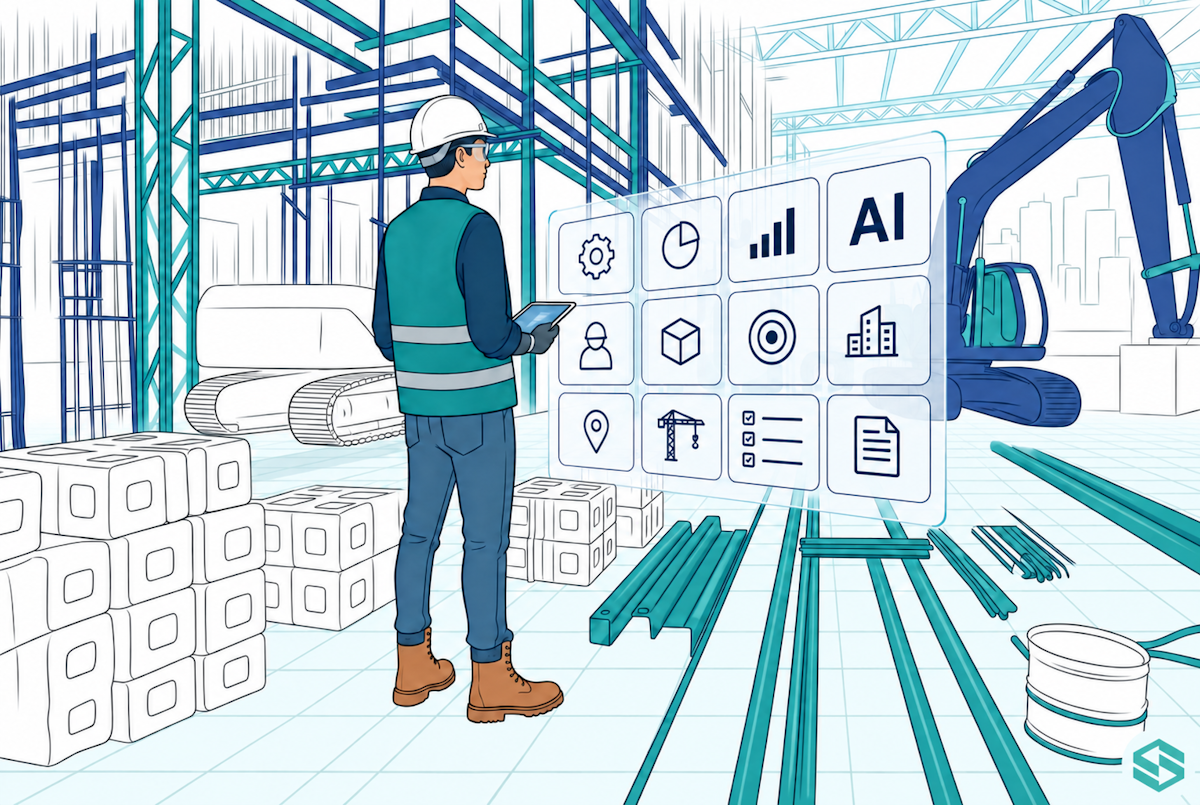
AI in Construction vs ChatGPT - A generic AI gives you generic answers. Here is why context is what separates it from an AI built for your work.
Key takeaways
A generic AI like ChatGPT is only as good as the context you give it. For real project work, supplying that context every time becomes a job of its own.
Consistency and hallucinations are two different problems. Inconsistency happens when the AI picks its own format. Hallucinations happen when it invents to cover a missing detail.
Most companies ban ChatGPT not because it is useless, but because they cannot trust everyone to use it safely. So the whole team gets blocked.
An AI built around your project already knows your data, context, and history, so it does not guess, drift, or need re-explaining.
The real question is not whether to use AI in construction. It is whether to use one you feed context to, or one that was built around your work from the start.
ChatGPT is smart, but it is generic. Here is what that means.
You have probably used it for work by now, and it is impressive. Ask it to draft a proposal and it writes a clean one in seconds. Ask it to render a 3D view from a drawing, or sketch out a BIM model, and it gives you something that looks polished and professional.
But the gap is easy to see. A generic AI only works with what you give it in that moment. It does not know your project the way your team does. So to get an answer that actually fits, you have to hand it the full context yourself. The details, the specs, the site conditions, the history of what has already happened on the job. Only once you type all of that in does the output start to feel right.
And here is the part that wears you down. You have to do it again the next time, and the time after that. The context does not stick. Every new task means explaining everything from scratch. A generic AI that was supposed to save you time quietly starts to cost you some.
Now compare that to an AI built for your project. It has your data, your workflow, and your history from the start, so you never have to explain the background. You just ask, and it answers in a way that fits. That is the real difference. Not a generic AI that you feed context to every time, but one that was built around your work from the beginning.
What is the real difference between ChatGPT and AI built for construction?
Think of it as the difference between a brilliant stranger and a colleague who has worked beside you for years.
A general AI like ChatGPT is the brilliant stranger. It has read almost everything ever written. But it walks onto your project knowing nothing about you, your team, your history, or what you are trying to do. So every time you ask it something, you have to explain all of it from scratch.
AI built for construction is the colleague. It sits inside the system you already work in. It knows your data, your workflow, and your history, because it is part of them. It does not need the backstory, because it was already there. That one difference, whether the AI knows your context or not, shapes everything else.
Why does ChatGPT make you do so much work?
Because you have to hand it the context it does not have. People have a name for this now. They call it prompt engineering. Really it is just the effort of explaining everything, every time.
You write longer and longer instructions to get a usable answer. Set the tone. Add the background. Spell out the format. The task you were trying to hand off has quietly turned into a writing job of its own. The AI was supposed to take work off your plate. Instead it gave you a new kind.
Some teams try to solve this by building a prompt library, a saved list of the perfect instructions for each task. It does not hold up, because context is never the same twice. Your project this week is not your project last month. A fixed prompt cannot follow a moving target. So you end up back where you started, doing it by hand.
Why can’t you trust it to stay consistent?
Because a generic AI fills in the gaps with its own choices.
If you do not give it detailed guidelines, it decides things like format on its own. Ask it for a report this week and it picks a layout. Ask again next week and it picks a different one. Run the same report five weeks in a row, and you get five different looking reports, different structure, different headings, different style.
For a one-off task, that does not matter. For real work, it does. A report you send every week, or a proposal that has to match your brand, needs to look the same every time. You should not have to rebuild the format on each run. Consistency is not something a generic AI gives you for free. You have to spell it out, every time.
Why does it sometimes make things up?
This is a different problem, and it has a different cause.
A generic AI only knows what you put in the prompt. If the prompt is missing something it needs, it does not stop to ask. It fills the gap with something that sounds right. That is a hallucination. The same thing happens when it does not have the right tool to check a fact. With nothing to go on, it invents.
The hard part is that you often cannot tell. The made-up answer looks as confident as a correct one. So unless you already know the right answer, you may not catch it.
An AI built around your project works differently. It is not relying on a single prompt to understand your work. It already has your data, your context, and the details of your site. So when it answers, it is drawing on what it actually knows about your project, not filling a gap with a guess. There is simply far less for it to invent.
Isn't it risky to let a general AI into your real systems?
It is something to think about, and most people underestimate it.
A generic AI was built for a chat window, not to reach into your live systems. When you give it that kind of access, you are trusting it to understand exactly what you meant. And because it does not really know your work, a misread instruction can lead to the wrong action.
But the bigger risk is about people, not the technology. In most organisations, only a small share of people, maybe 20 to 30%, really know how to get good output from a generic AI and use it responsibly. They know how to guide it, and how to catch a hallucination before it causes a problem. The rest do not, and you cannot count on everyone getting it right every time.
So organisations do the safe thing. They put a blanket policy in place: no ChatGPT at work. It protects them from the risk, but it also shuts down the people who could have used it well. Everyone gets blocked because of what might go wrong.
The problem is not that the generic AI is careless. It is that it was never designed to act inside your systems in the first place. It was designed to talk.
So where does that leave ChatGPT?
Use it for what it is genuinely good at. A rough first draft. A quick summary you will read and check. A way to think out loud. For those, a general AI is a real help.
But for the work that has to be right, consistent, and safe, a general model is not enough on its own. It does not know your context. It will not stay consistent. And it should not be trusted with your live systems. Those are not small gaps. They are the difference between an AI that is fun to try and one you can actually build on.
So the real question is not whether AI belongs in construction. It clearly does. The question is what kind. What does an AI look like when it is built for the work instead of borrowed from a chat window?
That is what Part 2 is about.
See how it works on a real site. Book a walkthrough.
Frequently Asked Questions
Can you use ChatGPT for construction work?
For quick, low-stakes tasks, yes, like a rough draft or a summary you will check yourself. For real project work, it struggles. It does not know your project, it gives different answers each time, and it was not built to act inside your systems. For that kind of work, AI built for construction is the better fit.
Why does ChatGPT give different answers to the same question?
General AI is built with a degree of randomness, so the same prompt can produce different results. That is fine for brainstorming, but a problem for proposals, reports, or anything that needs a consistent tone and a reliable answer every time.
What causes AI hallucinations?
An AI hallucinates when it fills a gap to complete an answer, and that gap is usually missing context. When a system already holds the right information, it has far less to invent, so it makes things up far less often.
What is prompt engineering, and why does it matter?
Prompt engineering is the effort of writing detailed instructions to get a general AI to produce something usable. It matters because it quietly shifts the work back onto you. If you have to craft the perfect request every time, the AI is not really saving you the effort.
Is it safe to give a general AI access to company systems?
Not on its own. A general AI was built for conversation, not for acting inside your live systems, so giving it real control is risky. Safe system access needs AI that was designed for it, with clear limits on what it can and cannot do.