How to Build High-Performance Construction Teams
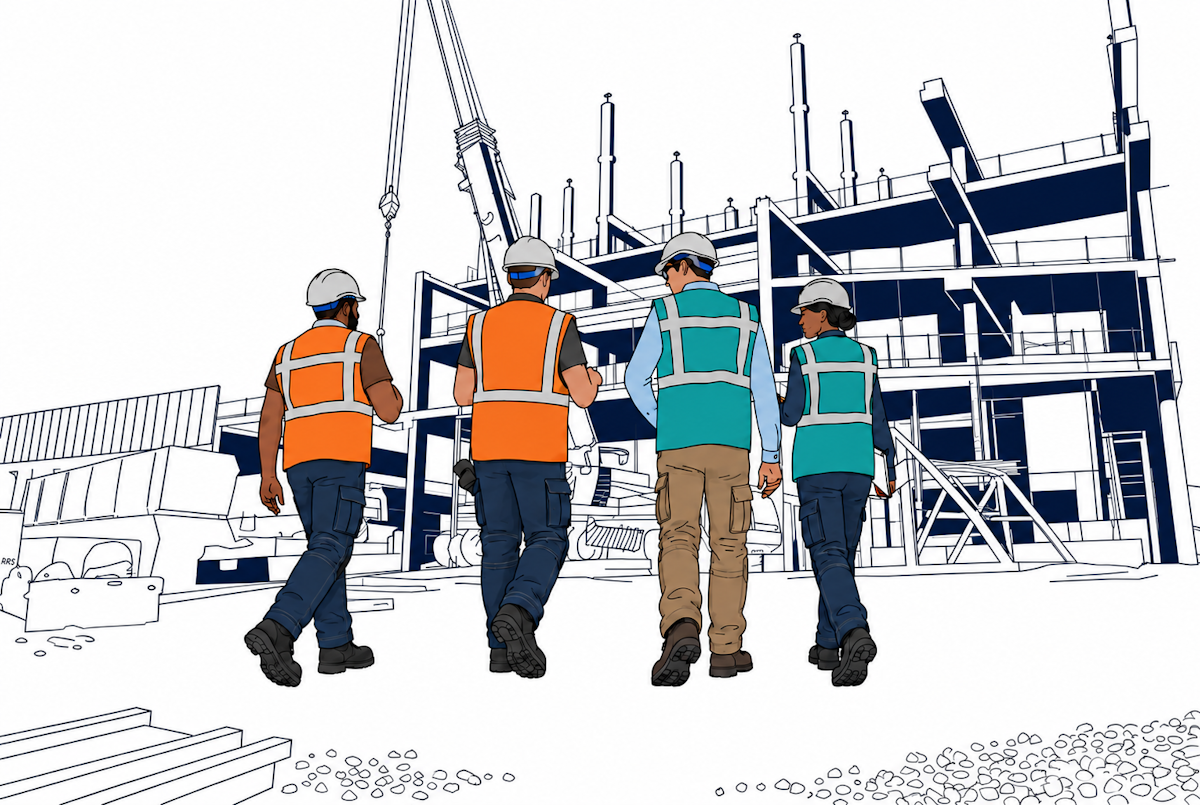
High-performance construction teams start with an engaged crew. Here is how to build one.
Key takeaways
Global construction productivity grew just 0.4% a year from 2000 to 2022, against about 2% for the total economy, according to McKinsey.
The construction labor shortage makes it harder to add people, so getting more from the crews you already have matters more.
Worker engagement is measurable. Gallup found that business units in the top quartile of engagement were 17% more productive and had 70% fewer safety incidents than those in the bottom quartile.
Three things build engagement in the field: communicating the goal, making progress visible, and recognizing good work.
During my time at Lafarge, I led shipping and distribution operations. When I started, our job was to answer the phone and react. If the phone didn’t ring, we assumed everything was fine, because our order and shipment data lived on paper that we updated by hand.
I built a simple order management system that pulled live scale data into our operations center, and the picture changed. We could spot delayed shipments ourselves and proactively call the quarry.
Seeing what is happening, while it is happening, changes how a team works. We saw the same shift on EllisDon’s Capital Line LRT project in Edmonton, where one Bobcat operator used to sit in the cab and wait to be told what to do next. Once the crew had clear targets and could see its progress, the same operator was getting out of the cab to find jobs around the site.
What changed was simple. He could see the goal, and his work was recognized. That is what high-performance construction teams look like up close: people who take ownership of their work and care about the outcome.
Why construction labor productivity has stalled
Global construction productivity grew only 0.4% a year between 2000 and 2022, about 10% in total, according to McKinsey. Over the same period the total economy grew about 2% a year and manufacturing about 3%.
The construction labor shortage adds pressure. In the U.S. alone, the industry needs about 349,000 new workers in 2026, and a majority of that demand comes from replacing retirees. Hiring helps, but it takes years to develop new workers. In the meantime, the quickest gain is getting more from the crews already on site.
What do high-performance construction teams do differently?
They are engaged. Gallup’s meta-analysis of 82,248 business units across 49 industries found that units in the top quartile of engagement were 17% more productive, 21% more profitable, and had 70% fewer safety incidents than units in the bottom quartile. Those are all-industry results, and they fit what we see on construction sites. Engaged crews work together, solve problems while they are small, and stay.
Engagement can be built, and it gets built through everyday field operations: the toolbox talk, the daily progress update, the recognition at the end of a shift.
Three ways to build worker engagement in the field
None of these costs much.
1. Communicate the goal
The crew needs to know the target and their part in it. When people know what they are aiming at and why it matters, they make better calls on their own. Start at the toolbox talk, then put the target in writing so everyone is working from the same number and nobody relies on word of mouth.
2. Make progress visible
A crew that can see how close it is to the target pulls toward it. Share progress every day: panels installed, pours completed, hours against plan. People pace their work differently when they can see where they stand.
3. Recognize good work, by name
For years, the only time a worker heard from leadership was when something went wrong. When someone does something right, say so, by name, out loud. Effort that gets noticed gets repeated. On the Capital Line, recognition also came with a tangible reward: $8,530 in points, redeemed for gift cards.
What it looks like when it works
On the Capital Line, the crew achieved a 100% success rate across 44 activities. Labor productivity rose about 8%, and the crew finished 846 hours under plan, worth roughly $84,600 at a $100 burdened labor rate. The rewards cost $8,530. Read the full EllisDon case study.
The numbers came with a change in behavior:
They followed up on supply deliveries themselves to avoid delays.
They thought in production hours instead of just clocking in.
They talked about the target, because hitting it mattered to everyone.
Site leadership at EllisDon put it this way: “The crew is thinking about production now, whereas before, the attitude was, ‘Whatever happens is fine.’”
The pattern holds outside construction. At Amrize’s Brechin Quarry, a unionized crew of 21 across three shifts started by hitting 50% of its weekly targets. Leadership kept the targets in place and worked through the obstacles with the crew. After six months the crew was hitting 80%, and weekly production was up about 35% on average.
What comes next
A motivated crew still needs to know what to aim at this week, and setting that target well is a skill of its own. At Brechin, the early cycles hit only half their targets. How the team closed that gap is Part 2.
See how it works on a real site. Book a walkthrough.
Frequently Asked Questions
What makes a high-performance construction team?
A crew that shares a goal, communicates openly, holds each other accountable, and takes initiative. Skill matters, and engagement multiplies it. Gallup’s research found that highly engaged business units were more productive and had fewer safety incidents.
Why has construction labor productivity stalled?
Global construction productivity grew about 0.4% a year from 2000 to 2022, according to McKinsey, far behind the total economy and manufacturing. Commonly cited causes include slow technology adoption, an aging workforce, and demand for work growing faster than the available labor.
How do you improve labor productivity on a construction site?
Get more from the crew you have by engaging them. Communicate the goal clearly, make progress visible, and recognize good work. On EllisDon’s Capital Line project, that approach raised labor productivity about 8%.
Does worker engagement really affect productivity?
Yes. In Gallup’s 2016 meta-analysis of 82,248 business units across 49 industries, units in the top quartile of engagement were 17% more productive and had 70% fewer safety incidents than those in the bottom quartile. Those are all-industry results. On construction sites we see the same pattern: engaged crews take initiative, solve problems, and stay.