From Black Hole to Closed Loop: What We Learned About Technology Adoption in Mining
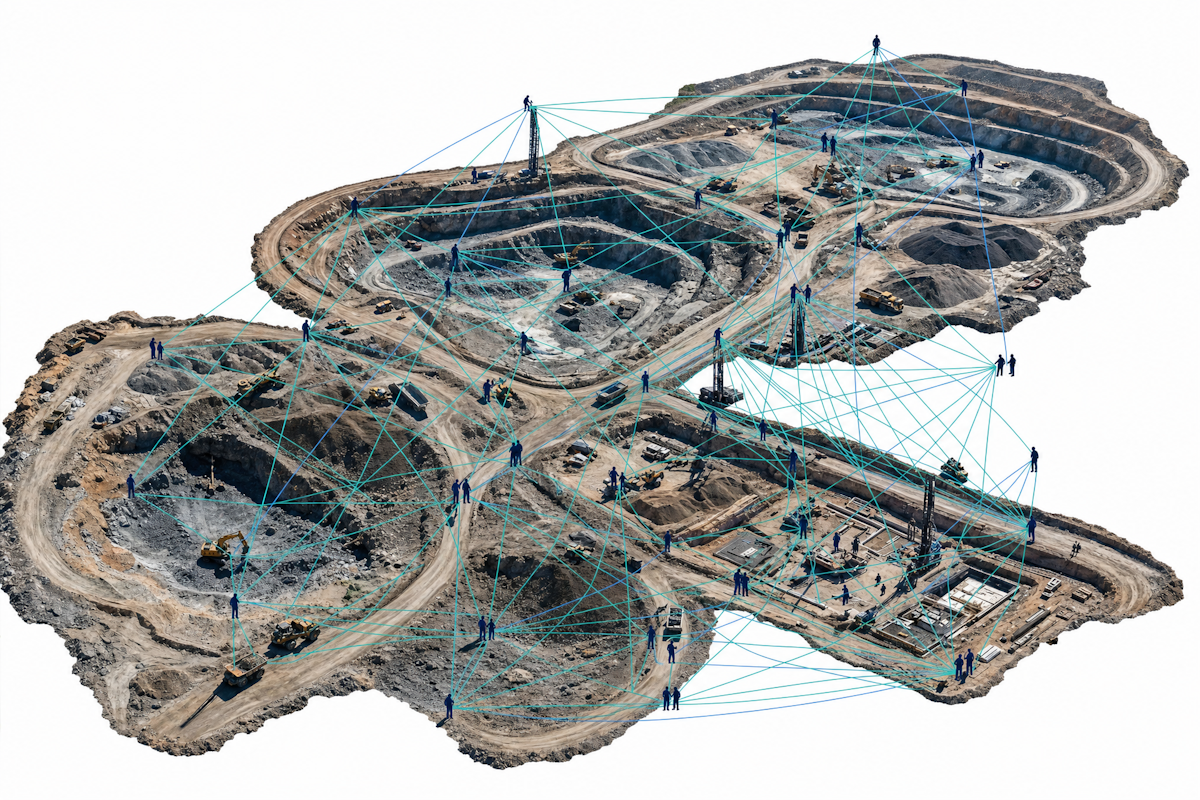
What deploying AI with hourly workers taught us about getting field crews to trust and use new technology on site.
At one aggregate quarry we worked with, the crew used to learn how the plant was doing from a guy named John.
Every day John wrote the tonnage on the lunchroom whiteboard. That was the system. One person, a marker, a board. The plant had monitors on the wall running BI dashboards, but keeping them live takes an analyst, and there wasn't one. So the screens were there. The data was there. And most shifts, the crew still had no idea how the plant was performing. John retired two years ago. Nobody replaced him.
I spent 10 years running a $100M aggregate operation in southern Ontario, so I have stood in those lunchrooms. I know what it feels like when a crew is connected to the outcome of their work, and I know what it feels like when they are not. Then I built eCompliance, an early mobile safety platform, and spent years working on technology adoption with field crews. I learned more from the failures than the wins. This is one of them.
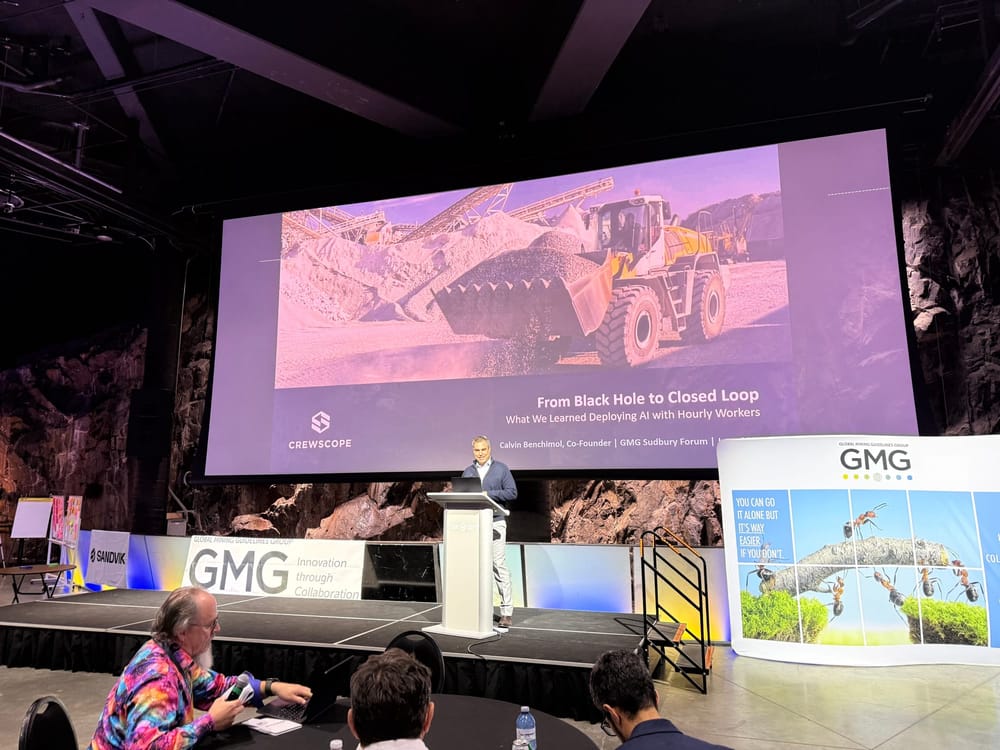
I told this story at the GMG Sudbury Forum this June, to a room full of mining leaders. Here is the same honest account I gave them: what we got wrong, what changed, and what it took to earn a yes.
Why this is landing now
Every leader in mining, industrial, and construction is about to face the same decision on technology adoption. The knowledge that runs your site still lives in people, and those people are retiring. The plant manager who could read conditions by feel is walking out the door with 30 years in his head.
At the same time, the pressure is building from the outside. Client mandates are growing. Collective agreements are changing. You will end up capturing AI field intelligence one way or another. The only question is whether you do it on your terms or someone else's. The leaders who move early get to shape it. The ones who wait get it handed to them.
The friction that stalls technology adoption
We deployed AI field workflows with a major general contractor across hospital construction in Canada. One project was our proving ground. 100% adoption across trades in eight weeks. Zero permit stoppages on one of the most constrained urban builds in the country. We believed in what we were building.
Then we expanded to two more hospital projects. Leadership was committed, the safety team was engaged, and we had proof it worked. It still didn't go. Here is what was underneath, because these are the real reasons field technology stalls:
- Executives were uncertain about championing a tool that brought transparency they hadn't grown up with, in front of people who had.
- Construction managers worried about liability. If AI captures a deficiency in writing and someone gets hurt, are they on record for negligence? That is a real legal question, and it stopped conversations before they started.
- Superintendents were already stretched. Another system promising a better future felt like a nice-to-have, not a priority.
- Workers had the most fundamental question of all. Will this data be used against me?
None of these are reasons AI fails. They are the questions every deployment has to answer before it earns the right to scale.
What actually changed it
The first thing that surprised people wasn't the outcome. It was that the tool worked as promised. In the field, that is not a given. A message arrived, did what it said, and came back with a response. That alone was unexpected, and it is where trust starts.
What closed the loop was speed. The first time a worker flagged something and saw it actioned quickly and visibly, report volume went up. We had proved the system wasn't a black hole. Nothing kills a new program faster than silence. When a worker shares something and hears nothing back, they don't just disengage. They tell the whole crew the program is worthless, and that signal travels fast.
The liability question got answered the same way. The AI captures and routes. The leader approves and closes. Nothing enters the record without site leadership sign-off. AI informs. People decide. That distinction mattered enormously to everyone carrying personal exposure, and it is the line we will never cross.
There is one more thing worth naming, because it shows up at every age and every level. On one project, we needed foreman sign-off trade by trade. A young foreman pushed back hard. The gist was that the crew shouldn't be trusted with information, that they'd only get confused. This was a crew with seasoned carpenters who had been doing the work for years. That attitude isn't learned in a vacuum. It is how someone was taught to lead.
We didn't argue. We showed what the updates looked like. What moved things was the crew itself. They wanted in, because other workers were already getting the updates and talking about them. The belief that workers can't be trusted with information is, in my experience, the single biggest barrier to getting value from any field technology.
The proof, in their words
At that quarry, once daily and weekly performance was visible against target, something changed that no dashboard could have delivered. The less experienced crew could see when they'd had a hard day and still done well. Leadership could recognize it with more than a gut feel and a radio call. One of the workers put it better than any of us could: “It helps us all keep each other accountable.”
That is not a technology outcome. That is what happens when people feel connected to the work.
What this means for how you run your site
Mining is not construction, and I want to be honest about where our experience ends. But the human dynamics transfer. If we were starting over, here is what we would do:
- Find the one problem the site leader already loses sleep over. At the quarry, it was workers punching in and out with no connection to how the plant was doing. At the hospital, it was only a handful of people who knew the next pour date. Solve that problem visibly and fast. Site leaders have scarce social capital with their crews for anything new. Spend it well, because they don't get a second shot.
- Treat velocity-to-close as your most important cultural metric. How fast a flag turns into a visible action tells you more about whether your culture is changing than any adoption number.
- Be honest about what you are asking workers to believe. In most operations, workers only hear from leadership when something goes wrong. When you tell them you want to recognize their contribution, the skepticism isn't about your program. It is a rational response to a long history. That belief gets earned through repeated, sustained action, not a launch email. Recognition is an accelerant for change. It sets the ceiling for everyone watching, not the floor.
Technology adoption in the field is not a rollout. It is a sustained effort with committed leadership and a tool that makes life better for the people using it. What is hard to scale isn't the software. It is the discipline.
The job now
There is an enormous amount of performance sitting dormant in the gap between what workers know and what leadership can see. Workers who feel heard, who trust the data won't be used against them, who see the impact of their contribution, they perform differently. Because they are connected to the work.
That is what John's whiteboard did. Every day, one person made sure the crew could see how the plant was doing. When John retired, the connection broke, because the knowledge was still in people, and the people were leaving.
The job now is to build a bridge that doesn't retire. Information down. Intelligence up.
FAQs
Is this a way to monitor workers?
No. The platform partners with workers, it does not watch them. Information flows down so crews can see how the site is doing, and intelligence flows up so leadership can act on what the crew knows. Workers control what they share. The value shows up when they trust the data won't be used against them.
If AI captures a deficiency in writing, who is on the record?
Site leadership controls what enters the record. The AI captures and routes. The leader approves and closes. Nothing enters the record without sign-off. AI informs. People decide. That line does not move, which is exactly what gives construction managers cover on liability.
We already have dashboards. Why isn't that enough?
Dashboards need someone to keep them running. At one quarry the screens were on the wall and the crew still didn't know how the plant was doing, because the analyst role went unfilled. Screens don't close the loop. A response to a worker who flagged something does.
Why does field technology fail on site, and what changes it?
Speed. The first time a worker flags something and sees it actioned quickly and visibly, report volume goes up. Silence does the opposite. When a worker hears nothing back, they tell the crew the program is worthless. Most field technology fails because the loop never closes. Treat velocity-to-close as your culture metric, not your adoption count.
How long does adoption take?
On one hospital build, we saw 100% adoption across trades in eight weeks. Speed of adoption tracks with speed of response. Where leaders close the loop fast, crews come on quickly. Where they don't, no timeline fixes it.
Does AI in mining actually reach the frontline worker?
That is the whole test. Our proven ground is construction and surface operations like quarries, and mining is different, with underground different again. So we are honest about where our experience ends. What transfers is the human dynamic. Field technology adoption lives or dies on whether the frontline worker sees value fast. Every site has knowledge sitting in people, and every site loses it when those people leave.
What does “close the loop” actually mean?
A worker shares something. It gets seen, actioned, and answered, visibly, and fast enough that the worker knows it mattered. That round trip is the loop. Most field programs capture input and stop there. That is the black hole. Closing it is the whole point.
Schedule a demo at crewscope.com
If you want to understand what Crewscope is, start with why we rebuilt it as an AI native platform. It is the same idea as this post, built into a tool: information down, intelligence up, with the leader always in control. Read why we rebuilt Crewscope.