The gift cards stopped. The culture didn’t.
What it takes to build proactive jobsite culture - EllisDon x Crewscope
Culture is one of those words that construction people distrust. It sounds like something from an HR deck. It sounds like the opposite of getting work done.
Chris Masse has a different definition. He arrived at it by running one of the most complex active hospital builds in Toronto. An active emergency room beside the work. Neuralink performing advanced neurosurgeries in that building. A schedule where every week matters.
“Not corporate speak about making people feel good. Jobsite culture is focused execution. Everyone knows the plan, understands their role, and gets that it is a team sport because of the dependencies. That, or it is chaos.”
Chris Masse · General Superintendent, EllisDon
That is what culture means on a jobsite. Not a program. Not a value. An operational state. Either the site is running in focused execution, or it is reactive. When it is focused, the Superintendent is in control. When it is reactive, the superintendent is chasing, trades arrive without context, and blockers surface after they have already become delays.
Building the first state is harder than it looks. This is what it took.
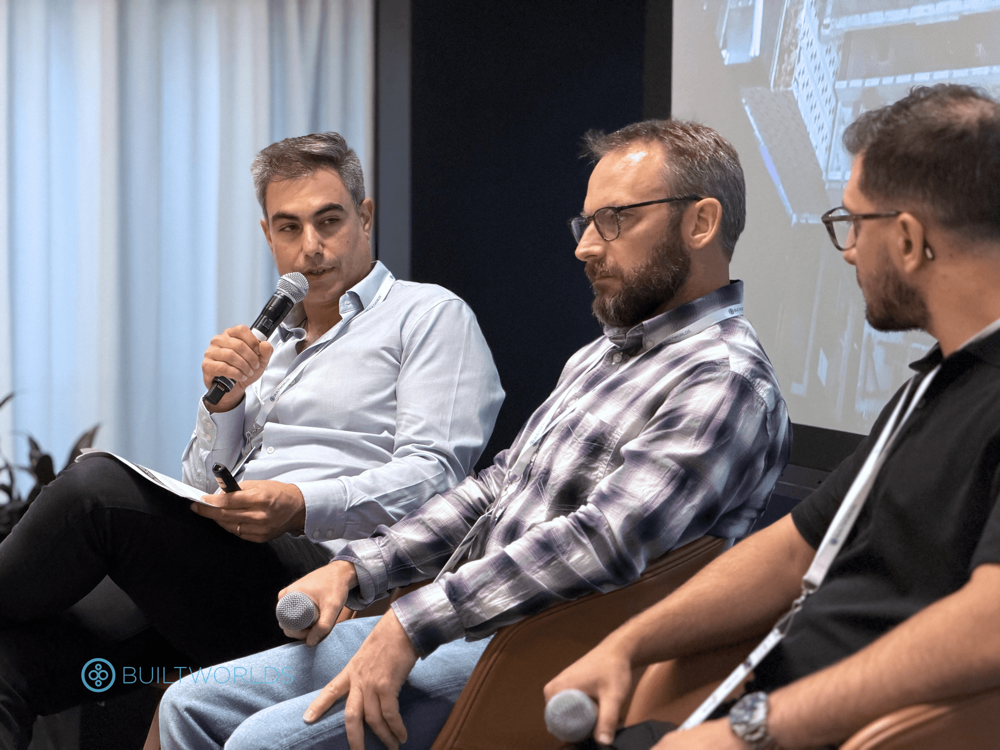
From left: Calvin Benchimol, CEO of Crewscope; Chris Masse, General Superintendent at EllisDon; and Kyle Sousa, Construction Technology Lead at EllisDon, speaking during their session at BuiltWorlds Construction Tech Conference 2026.
What culture requires
Kyle Sousa has watched enough technology deployments to know where the leverage is.
“Technology alone is rarely the limiting factor. Most organizations have access to similar tools. The real differentiator is how effectively they align people, processes, and leadership to drive adoption and create measurable outcomes.”
Kyle Sousa · Construction Technology Manager, EllisDon
Before the tool matters, three conditions have to be in place. In this order.
Information reaches the right person before the week starts. Not in a meeting. Not verbally. In writing, to every foreman and every crew member, before the work begins. A plan that only exists in the superintendent's head degrades the moment it leaves the room. A worker who does not know the plan cannot own it. A worker who cannot own the plan cannot be accountable to it.
Accountability follows ownership. When workers receive the plan in writing, they own it differently. The commitment becomes visible. Accountability becomes horizontal, not just vertical. Trades are accountable to each other because the dependencies are visible to everyone.
Recognition makes good work visible. Most field workers have been conditioned to hear from management only when something goes wrong. Recognition breaks that conditioning. When good work gets seen and named, the behavior that produced it repeats. Not because of the reward. Because positive recognition sets the ceiling, not the floor.
Build those three conditions. In that order. Culture follows.
What it actually took
Getting the program started took sustained effort from Chris. Consistent planning is not easy. It takes real discipline to ensure it’s done on time, so everyone has a chance to review before the meeting.
“It's a lot of upfront planning from my team. And then the chase begins. Getting the people to get the information to the software was probably the bigger issue out of all of that.”
Chris Masse · General Superintendent, EllisDon
It took three months to get the planning team disciplined enough to produce the lookahead consistently. Three months of daily pressure to ensure the information could reliably reach the field.
The program meant to encourage preparation so the weekly lookahead meeting could be spent working through the sequence collaboratively. And to get the trade leaders to provide transparent and accountable commitments, which were shared with everyone on site via text message.
To soften the edge from all this transparency, Chris included reward points to all the trades for making their targets. Not much, enough for lunch. To encourage participation and sign-up for the messages.
The recognition program met the same resistance.
“It wasn't well-perceived. Really, you're going to give us gift cards for doing our jobs? Everybody thought there was a plan B or EllisDon was tracking everybody.”
Chris Masse · General Superintendent, EllisDon
The cynicism was real and earned. Workers who have only ever heard from management when something goes wrong do not immediately trust a program that says good work will be recognized. Chris pushed through it.
“When you're invested, you have to keep pushing it.”
Chris Masse · General Superintendent, EllisDon
The program has been running now for over a year. Chris has not handed out a gift card in four months. But that is not where the story starts. Both statements describe the same thing from different vantage points. The tool does not produce the culture. The leadership does. The tool captures it.
“The path from pilot to operating model requires leadership, accountability, clear metrics, and persistence.”
Kyle Sousa · Construction Technology Manager, EllisDon
Both statements describe the same thing from different vantage points. The tool does not produce the culture. The leadership does. The tool captures it.
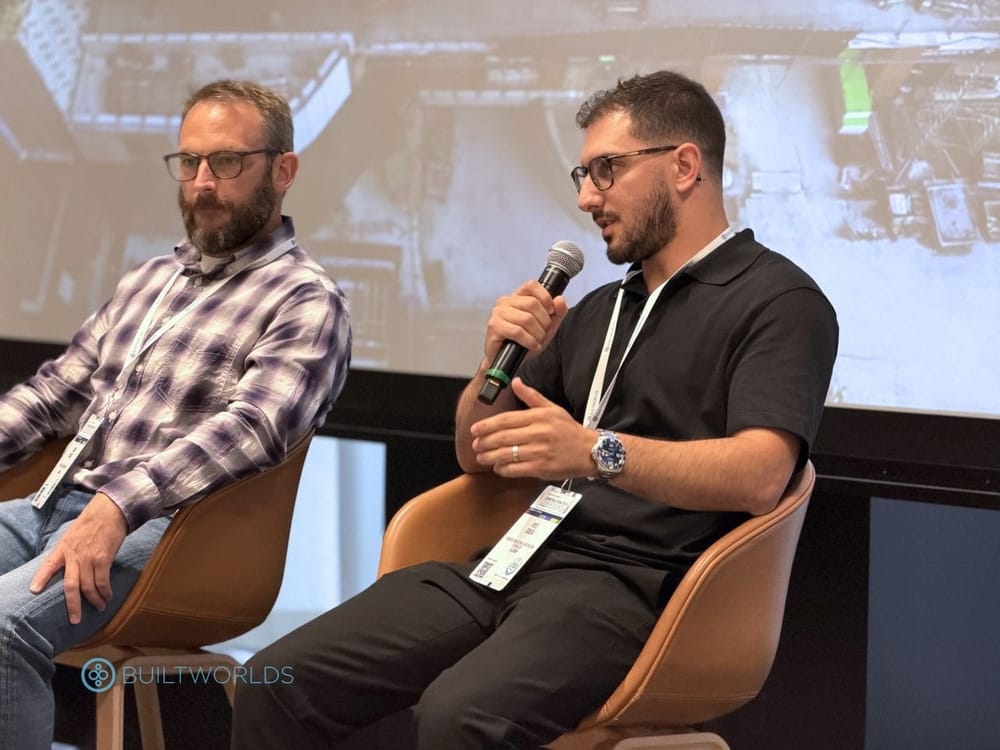 Kyle Sousa, Construction Technology Lead at EllisDon, speaking at the BuiltWorlds Construction Tech Conference 2026 event.
When the gift cards paused
At some point the resistance broke. Trades who had been skeptical started participating. Workers who had only heard criticism started receiving recognition. The plan started reaching the field consistently.
Then the gift cards paused four months ago. The program still runs. The behavior persists.
“The gift cards are a byproduct. It's good behavior recognition. The tool came first. The reward was downstream.”
Kyle Sousa · Construction Technology Manager, EllisDon
The mechanism created the habit. The habit became the operation. The incentive became irrelevant.
“Nobody likes to be watched. Everybody likes to be recognized.”
Chris Masse · General Superintendent, EllisDon
Recognition built the operational state. Rewards accelerated change. Once the operational state was built, it no longer needed the rewards to sustain it. That is what culture looks like when it works.
Why this one worked
The question worth asking is why this deployment produced that outcome when so many others do not.
“Innovation succeeds when field teams are empowered to help shape solutions, not just receive them.”
Kyle Sousa · Construction Technology Manager, EllisDon
The Crewscope deployment at Toronto Western did not arrive as a finished product. It arrived as a starting point. What the site needed shaped what the product became. A technology partner willing to adapt to the operating conditions rather than asking the site to adapt to the tool. An institutional partner committed to piloting seriously and investing in the relationship long enough to get through the chase.
“When Crewscope came to see me, I didn't ask them to come. And what they were trying to do was not how it ended up being adopted.”
Chris Masse · General Superintendent, EllisDon
That is not a criticism. It is the proof. The product that left the site was different from the product that arrived because the site had the leadership and institutional backing to shape it. Not build-in-house. Not buy off the shelf. Build the relationship until the tool fits the work.
Where the market is going
“Owners are demanding greater transparency into project performance, risks, schedules, and cost controls.”
Kyle Sousa · Construction Technology Manager, EllisDon“Technology is shifting from a competitive advantage to a business expectation, making implementation and adoption the new differentiators.”
Kyle Sousa · Construction Technology Manager, EllisDon
Owners are not yet writing specific tools into RFPs. But they are asking about approach before projects start. How information reaches the field. How accountability is maintained. How good work gets recognized.
“Our clients are starting to ask for this. It's part of our bid.”
Chris Masse · General Superintendent, EllisDon
That question, asked before a project begins rather than never at all, is the signal. The GCs who will compete for the next generation of complex work are not the ones with the most tools. They are the ones who have built the operational conditions for focused execution. Information. Accountability. Recognition. In that order.
The gift cards were never the point.
They were the signal that good work gets seen. Once that signal was established and the habit was built, the mechanism became irrelevant.
What remained was the operational state Chris set out to build. Focused execution. Everyone knowing the plan. A team sport.
The gift cards paused. The culture didn't.
Frequently asked questions
What is jobsite culture in construction?
Jobsite culture is an operational state, not a values statement. It means everyone knows the plan, understands their role, and understands the dependencies between trades. When it is working, the superintendent is in control. When it is not, the site is reactive and blockers surface only after they have become delays.
Do recognition programs work on construction sites?
They work when they are built on top of good planning, not in place of it. At EllisDon's UHN Toronto Western project, the initial response was skepticism. After a year, the incentives paused and the behaviour continued. Recognition changes the conditioning that field workers only hear from management when something goes wrong.
How long does it take to build a proactive jobsite culture?
At UHN Toronto Western it took three months of daily pressure to get the planning team producing a consistent weekly lookahead, and roughly a year before the program ran without incentives. The order matters more than the timeline: information reaches the field first, accountability follows, then recognition.
Why do construction technology deployments fail to get adopted?
Most organizations have access to similar tools, so the tool is rarely the limiting factor. Adoption depends on whether leadership, process, and field input are aligned behind it. Deployments that succeed usually change shape on site, because the field helps build the solution instead of receiving a finished one.
What is field intelligence in construction management?
Field intelligence is the practice of capturing what crews already know, at the moment they know it, and getting it back to the people who need it before the week starts. It closes the gap between trailer-level planning and crew-level reality on active sites.