AI Field Intelligence: The Last Hundred Feet Construction Keeps Missing
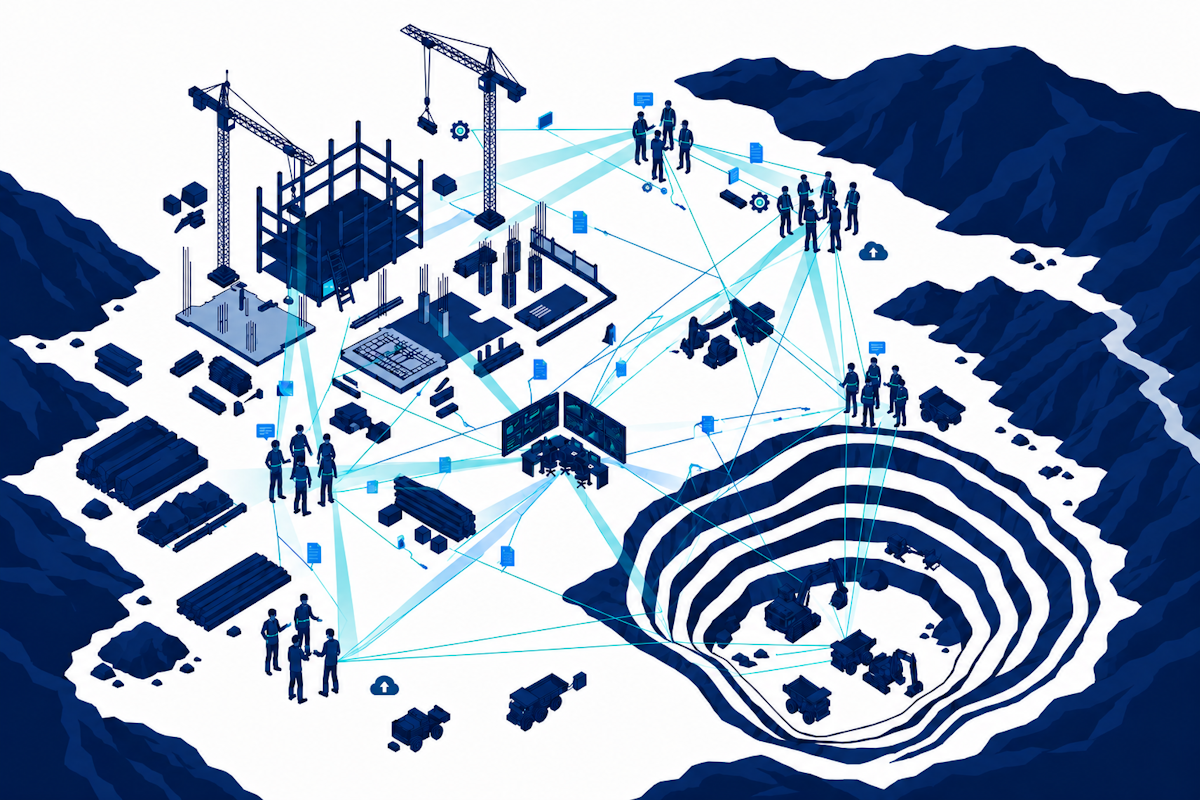
AI in construction management has optimized the office. The field, where the real intelligence lives, still walks off site every shift.

Most project dashboards give you a clear picture of the wrong things. The schedule is green. The cost report is current. The safety log is filed. None of it tells you whether the crews on that site are operating as a single intelligent system or just executing in the dark.
That gap is where projects are won and lost. And it is almost never on a dashboard.
I made this case at the AEC Stack panel Canadian AI for Construction: Workforce Readiness and Capability this May, in front of a room of builders and industry leaders. Here is the argument I put to them, grounded in three years of building this on real sites with tier 1 operators like EllisDon and Amrize.
Why this matters now
Almost every AI conversation in construction right now focuses on office data. Estimates, schedules, drawings, RFIs. Information that already exists, sitting in systems, waiting to be optimized. That work is real, and it matters.
But it is only half the picture. Labour is tight. Margins are thinner. Owners want more transparency and innovation that reduces execution risk. The pressure is on the field.
Here is what most people get wrong about construction. The field is not short on data. It is the richest data source of the whole project. On paper, in a text to a foreman, in someone's memory. It’s unstructured and never reaches a system anyone can act on.
So it stays anecdotal. Logging is slow, manual work, and there is no easy way to do it in the field, so what little is captured is reconstructed from memory after the shift behind a desk. The job gets done, the shift ends, and the intelligence walks off the site. For years, we have digitized the executive layer of construction. Estimating, scheduling, document control. The crew, the people doing the work, got nearly none of it. That is the gap we intend to close.
Field intelligence lives in the last hundred feet
The foreman is the translation layer between the plan and the work. That translation happens every morning, out loud, and almost never gets written down. It works. But it depends entirely on one person's experience and memory.
Material gets dropped twenty feet off. Looks like nothing. The rebar crew is blocked by Thursday and the pour slips. Someone on that site knew. They just had no easy way to get the information to right person who could solve it.
That is field intelligence. The executive AI conversation is not wrong. It is incomplete. The context that makes the office data useful is lost in the last hundred feet, between the trailer and the crew.

Ehsan Foroughi on the Canadian AI for Construction panel at Toronto Tech Week 2026.
The three signals nobody captures
Ask most teams how a site is doing, and they point at percent complete. That number tells you what already happened. It does not tell you whether the site is healthy right now. Three signals do. Almost no one captures them systematically.
Constraint velocity.
Not whether a blocker gets logged, but how fast it gets surfaced. A worker who flags a problem within the hour is a completely different asset than one who mentions it the next morning, and it lands in the system by Thursday. Every hour a constraint sits, downstream work is being built on a false assumption.
Crew level plan adherence.
Not project schedule variance. Whether the foreman's crew did what the foreman said they would do this week. That is where most slippage starts, long before it shows up in a report.
Participation rate.
A site where 500 workers send observations is not the same environment as one where 3 supervisors file reports at the end of day. The worker participation rate tells you whether you have a workforce or a sensor network.
This is the part of AI in construction management that gets skipped. We have invested enormously in project management systems. We are badly underinvested in workforce intelligence. The data already exists on every site. The only question is whether we have the infrastructure and the culture to capture it.
AI Field Intelligence turns discipline from a tax into a multiplier
Every good superintendent already runs an operating rhythm. Plan the day, share it, execute safely, check what happened. Fast, accurate information moving across the site. Blockers solved before they become delays.
We took the people best at running a site and buried them in paperwork. The tighter the rhythm they wanted to run, the more admin it cost them. Discipline had no leverage. It had overhead.
“When are we pouring L3?” “Laydown is blocking rebar. Pour the core walls instead.” That exchange is the whole job. It either happens in seconds, or it costs you a day. For decades, it depended on one person to hold it in their head and being in the right place at the right time. Individual heroics, every day.
AI Field Intelligence changes the economics of that discipline. Not by replacing the super, but by removing the admin cost from running a tight site. For the first time, the discipline receives a multiplier rather than a tax.
The proof is in how the rhythm holds under pressure
On a recent Toronto build with Deltera, the team started late and lost 47 days to weather. They finished 28 days ahead of schedule. Not because anyone worked harder. Because the rhythm held under pressure, and the super could run it from the field instead of the trailer.
What this means for how you run a site
The next gain in labour productivity is not going to come from another project management dashboard. That layer is mature. The gain comes from the field, from capturing the intelligence your crew already generates and putting it to work the same day.
The test of good field operations software is whether a worker will use it. We believe it should add zero friction: no app, no login, and no training. We also believe it should reduce current admin workload so site leaders can actually stay in the field.
AI will change construction, including how site leaders work. Less time chasing information. More time coaching, planning, and building relationships that retention depends on. The firms that develop the culture and field infrastructure that support their site leaders in the field will pull away from those that hand them a new app and expect productivity to follow.
The last question
The risk here is the same one construction has always faced. Technology without culture change just moves the problem around. A tool that watches the field will fail the way every surveillance tool before it has failed. A tool that gives the field a voice and closes the loop quickly is the future job site we prefer.
The intelligence is already out there. It is generated on every site, every shift, in the last hundred feet. The only question left is who decides to capture and use it.

Frequently asked questions
What is AI Field Intelligence?
It is the layer that captures what happens in the field. The observations, blockers, and context that crews generate every shift but that never make it into a log. Cameras capture what went wrong. AI Field Intelligence captures what the people doing the work actually see and know, and turns it into a usable record the same day.
How is this different from a project management platform like Procore?
Those platforms manage data that already exists in the office. Schedules, drawings, RFIs. AI Field Intelligence captures the data that does not exist yet, what the crew sees and says in the last hundred feet. It does not replace those systems. It feeds them.
Does Crewscope integrate with the software we already use?
Yes. Crewscope connects to the tools you already run, so field data flows into your existing workflows, not into another silo. Two way sync with Procore, plus Autodesk, Fieldwire, Touchplan, and Google Sheets. Custom integrations are available through the Crewscope API.
Do workers have to download an app or log in?
No. Workers report by text, voice note, or photo to a dedicated site number. No app, no login, no training. It works on any phone, in the worker's first language. If a tool adds friction at the point of adoption, the field will not use it. Meeting people where they are is the whole point.
Is this a surveillance tool?
No, and the difference matters. Cameras and monitoring capture what went wrong and make workers perform for a lens. Crewscope is the opposite. The worker chooses to report, in their own words, then sees the issue get fixed and gets credit for it. It is built to capture what goes right. That is why people keep using it.
How do you know if a site's workforce is actually ready to deliver?
Three signals. Constraint velocity, how fast blockers get surfaced. Crew level plan adherence, whether the crew did what the foreman said they would this week. And participation rate, how many workers contribute intelligence versus how many just execute and go home. Together they tell you whether you have a workforce or a sensor network.
If you want to understand what Crewscope is, start with why we rebuilt it as an AI native platform. It is the same idea as this post, built into a tool: information down, intelligence up, with the leader always in control. Read why we rebuilt Crewscope.