What Can AI in Construction Actually Do on Site?
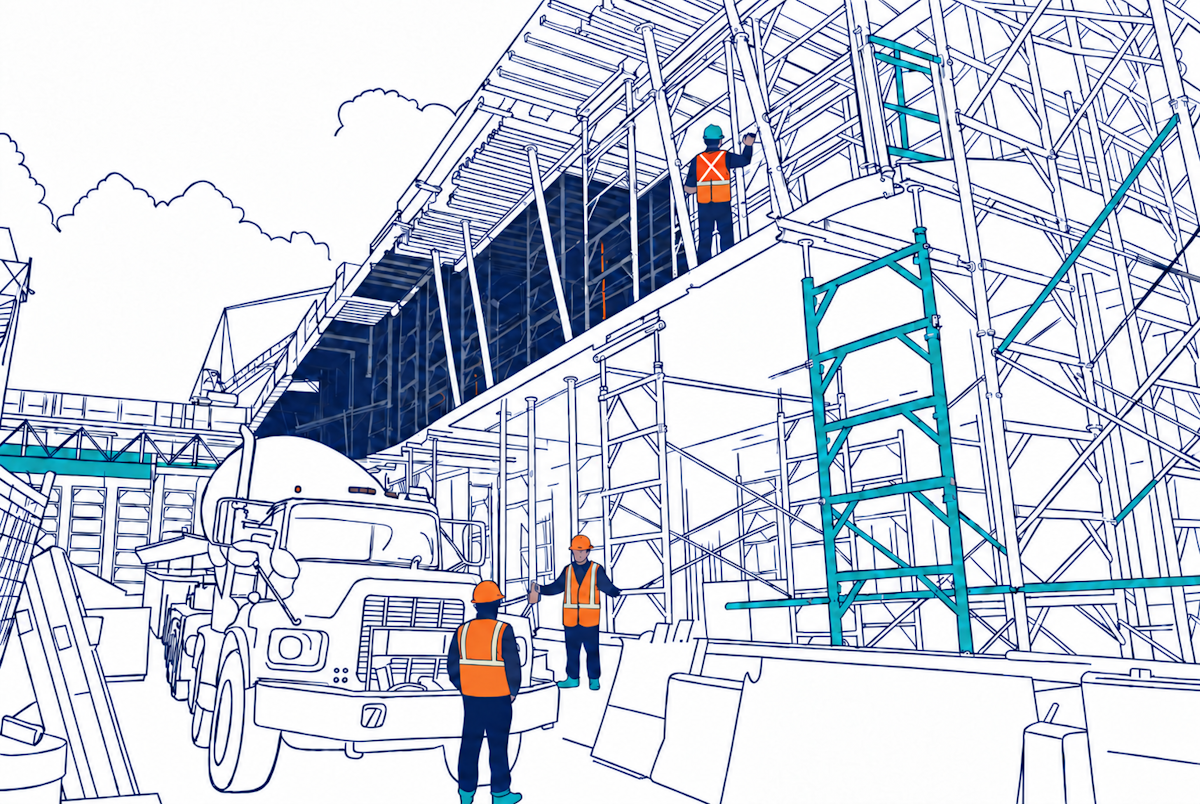
The next generation of AI in construction does not just talk. It knows your project and does the work. Here is what that looks like.
Key takeaways
AI built for construction lives inside your systems and already knows your project, so you stop re-explaining the context every time.
Because the context is built in, the output is consistent, the same dependable answer every time, not a new version on each try.
The real test is whether it does the work, not just describes it. It can turn your field reports into trade packages, send them to foremen, and follow up for photo confirmation, with no one chasing by hand.
Most AI serves one user. Construction needs it to coordinate across the worker, the supervisor, the subtrade, and the owner, while keeping each one’s information private.
The next generation is not the smartest model in the room. It is the one that knows your site, does the work, and keeps the team moving.
In Part 1, we looked at why a general AI like ChatGPT falls short for real construction work. It is brilliant, but it knows nothing about your project, it will not stay consistent, and it was never built to act inside your systems.
So the question is not whether AI belongs in construction. It does. The question is what kind.
The next generation of AI in construction is not a smarter chatbot. It is AI that knows your work and does it.
What does "built for construction" actually mean?
It means the AI lives inside the system you already use, not off to the side in a chat window.
Because it is built in, it has what a general AI never has. It knows your project, your data, your workflow, and your history, because it is part of them. You do not spend ten minutes explaining the situation before it can help. It already has the context.
Context is what holds AI back at work. Build it in, and everything else gets easier.
That one change fixes the problems from what we discussed earlier. No more explaining everything, every time. No more prompt engineering. The AI starts the job already knowing what it needs to know.
How does AI in construction give the same answer every time?
In Can You Use ChatGPT for Construction Work?, we saw that a general AI is built to be a little different each time you ask. The next generation handles that with something built in behind the scenes.
Think about your regular coffee shop. A new barista has to ask you everything, what size, what milk, hot or iced. The barista who has served you every morning for a year just starts making your order the moment you walk in. They do not ask, because they already know.
That is the difference. A general AI is the new barista. AI built into your work is the one who knows your order. It already holds the context for each task, so you never spell it out. Ask it for a proposal, and it knows your tone and format, so the answer comes back the same every time.
You should not have to craft the perfect request. The system should already know how the work is done.
This is what makes AI usable for the work that actually counts.
Does AI in construction just answer, or actually do the work?
This is the real line between the old way and the next generation.
A general chatbot answers. Ask it how to do something, and it tells you the steps, then leaves you to do them yourself. It is like asking for directions and still having to make the whole drive.
AI built for construction does the drive. Here is what that looks like on a real site.
It ingests your field engineering observation reports. It identifies the open deficiencies, identifies the trade responsible for each one, cuts the photos out of the PDFs, and builds a trade-specific package for every trade. Then it sends each package to the right foreman, and follows up until it gets photo confirmation that the fix is done. Nobody sorts the reports by hand. Nobody chases the foreman. Nobody builds the packages.
That is the shift that gives people their time back. The sorting, the chasing, the admin that fills a day, the AI carries it, so the people on site can focus on the work only they can do.
What about everyone else on the project?
Here is where most AI stops short, and where the next generation has to go further.
Almost every AI today is built for one person. One user, one chat, one task. But real construction work is not one person. A single decision can involve a worker, a supervisor, a subtrade, and an owner. Each one holds a different piece of the picture. And not all of it is meant to be shared.
Real work is not one person in a chat window. It is a whole team, each holding a piece.
This is the part of the problem we spent the most time on at Crewscope. Our AI is built to coordinate across everyone on a project, not just serve one user. And it does it through a patented privacy design that protects what each person shares.
Think about the departments in a company. Finance, HR, operations, all working toward the same goal. They share what the others need to get the work done. But each one also holds information that stays within its walls. HR keeps personal files private. Finance keeps salaries private. They cooperate fully, and they still protect what is theirs to protect. Nobody expects HR to hand its files to finance just because they work for the same company.
That is how our AI works. Every person talks to their own private version of it. When something needs to move between them, only the necessary, non-confidential details pass along. Nothing private leaks. And no one can pressure the AI into revealing what it should not. The coordination happens, but each person's information stays theirs.
AI that works across a team has to protect each person on it. That is a design choice, not an afterthought.
That is a fundamentally different thing from a single-user chatbot. It is what lets AI work across a whole site, not just for one person at a desk.
So what is the next generation of AI in construction?
Put it together, and the picture is simple.
It is not the smartest model in the room. It is the one that knows your site, because it is built into your work. It gives you a dependable answer, the same one every time, because the context and the guardrails are already there. It does the work instead of just describing it. And it coordinates across the whole team while keeping each person's information safe.
The next generation of AI in construction is not louder or cleverer. It is the one that quietly does the work and keeps the whole team moving.
That is what we set out to build at Crewscope. Not a chatbot bolted onto construction, but AI built into it, so the people doing the work get the work done easily and efficiently.
See what the next generation of AI in construction looks like on a real project.
Frequently Asked Questions
What can AI actually do in construction?
The next generation does more than answer questions. Because it is built into the systems you already use, it can do real tasks, create a record, update a log, place an order, right inside the system. It also coordinates across the team, so the work moves without someone chasing it by hand.
What is the difference between AI-native and a regular AI chatbot?
An AI-native system is built into your software, so it already knows your project, your data, and your history, and it can act inside your systems. A regular chatbot sits off to the side, knows nothing about your work, and only tells you how to do things. One does the job. The other describes it.
How does AI in construction stay consistent and reliable?
By building the context and the instructions in, rather than relying on the user to supply them each time. When the system already knows your tone, format, and project, it gives the same dependable answer every time, instead of a slightly different one on each try.
Can AI coordinate across different people on a project?
Yes, if it is designed for it. Most AI is built for one user. Crewscope's AI is built for multi-party coordination, so a worker, a supervisor, a subtrade, and an owner can all take part. A patented privacy design makes sure only the necessary details move between them, and each person's confidential information stays protected.
Is my data safe with AI built into our systems?
It should be, when privacy is part of the design. In Crewscope's case, every person talks to their own private version of the AI, and only non-confidential details pass between them when coordination is needed. Nothing private leaks, and the AI cannot be pressured into revealing what it should not.