What Your Safety Data Is Telling You: The Risk That Goes Quiet
By Calvin Benchimol6 min read
Every project has a system of record. Most of what the field knows never reaches it. Here is what happens when it does, and how to read it for patterns.
Key takeaways
- The people closest to the work are the highest-resolution sensor on a site. Most of what they know never makes it into the record, because sharing takes time.
- In real safety data, structure and follow-through often live in different places. You can know what the hazard was, or that it was closed. Rarely both.
- The risk that goes quiet is a signal. When the most frequent hazard stops reporting, that silence is worth acting on, not guessing about.
- Rare risks hide in the notes, not the categories. They only get seen if someone reads the text, or the system does.
- When everyone contributes to one record, the resolution gets sharper with every person who takes part.
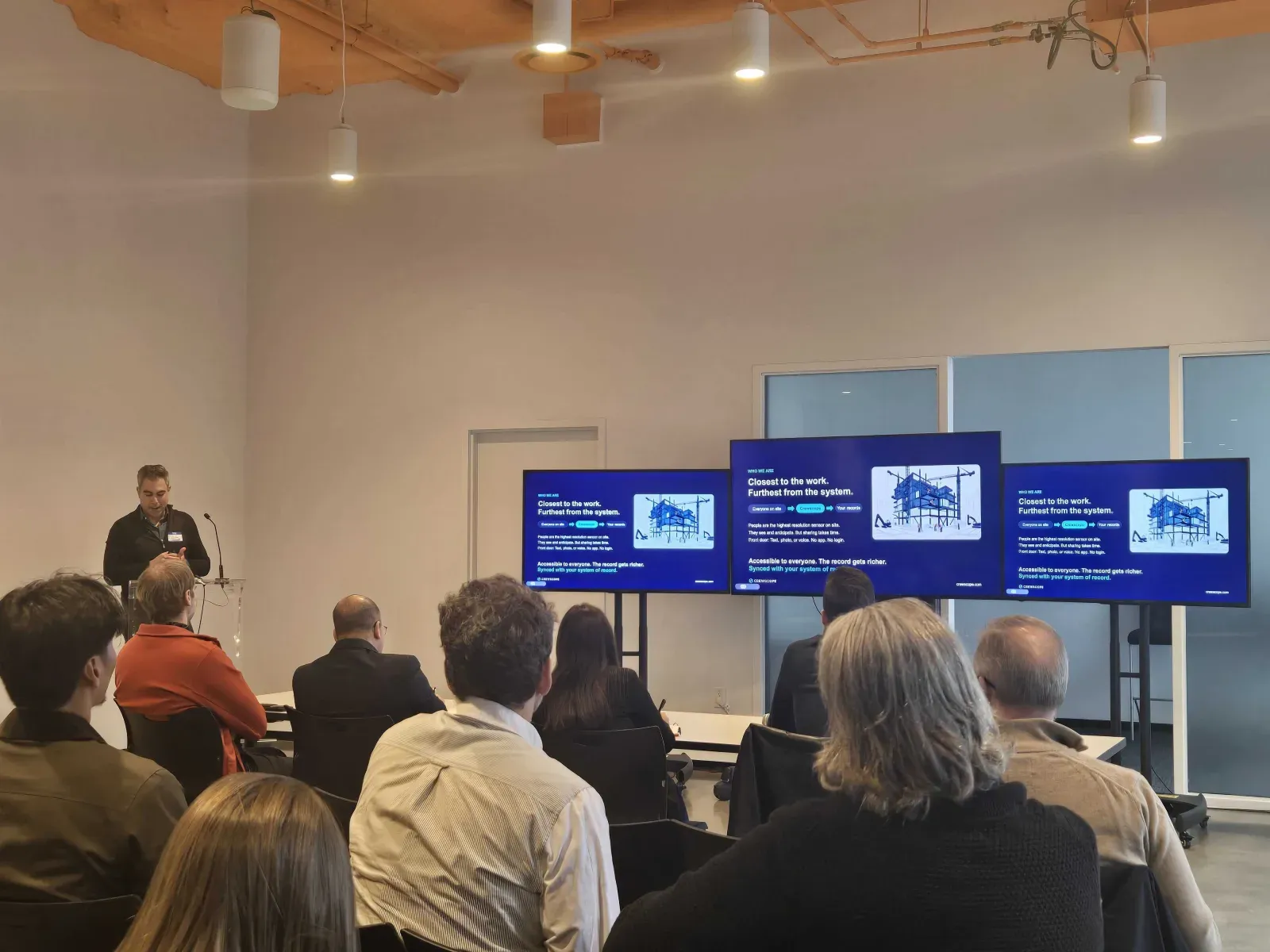
Crewscope was invited to take part in a construction data challenge run by Autodesk Research and DMZ, alongside a group of leading general contractors. It is an invitation-only program, and only a small, curated group of teams was selected to build on the data.
The idea behind it is simple. Real AI value in construction needs data at an industry scale, far more than any single company holds. So the organisers pooled real project data, anonymized it, and gave each team one month to find something useful in it.
The dataset was a mix of health and safety and quality records, stripped of any identifying project, company, or personnel details. We selected two projects, loaded their safety records into Crewscope, and ran our usual weekly safety report, the kind we build for site leadership teams. We read it for patterns, not details.
Why does so much of what the field knows never reach the record?
Every project has a system of record. The field has never had a front door to it.
The people closest to the work are the highest-resolution sensor on site. They do not just see what is happening. They anticipate it. But sharing takes time, so most of what they know never makes it into the record. A front door changes that. A text, a photo, or a voice note. No app. No login. The ticket gets structured, routed to the right trade, synced with your system of record, and made accessible to everyone.
By getting the entire site to participate, the record gets richer.
What does real safety data actually show?
We took safety records from two anonymized projects and read them for patterns, not details. Two things stood out.
First, structure and follow-through live in different places. Records with no hazard category were closed 99 percent of the time. Records with a category were closed 18 percent of the time. Only 7.5 percent had both. You can know what the hazard was, or that it was closed. Rarely both.
Second, rare risks live in the notes. Confined space had no category at all, and showed up 21 times in the text. Normally, only an analyst ever reads the notes.
How do you catch the risk that goes quiet?
When the most frequent risk goes silent, you do not guess why.
Take falls, the largest category all year at one project. It reported most weeks, with the odd quiet one. Then it went silent. Five weeks with nothing, thirty-nine days. The longest gap before that was twenty-six. The project had not ended, but the report could not say why it went quiet. The risk may be gone. Someone may be away. The scope may have changed. Or reporting may have slipped.
So the site leader acts. A text to create a recommendation that the HSE Coordinator do a physical inspection. HSE gets the assignment with the weekly analysis, walks the site, and texts back photos and notes. Whatever he finds goes into the record. Site leadership verifies the inspection and closes the recommendation: tie-off confirmed, the rebar opening cover appropriate, railing height more than sufficient. The silence got answered with action.
That record now holds the hazard, who checked it, and that it is closed. All in one place.
What about the rare risk nobody has a habit around?
For the uncommon risk, you are more careful.
The other signal was confined space at a second project. A flat line for months, one blip in November, then a spike, one, three, five in three weeks. The report flagged it. Confined space is planned work, and crews have no habit around it. So the site leader creates a recommendation for HSE to run a pre-entry brief.
The system keeps site leaders in control. It does not invent procedures or fill in generic details. The brief goes to HSE using historical details, and highlights the areas that only HSE can fill in: the permit requirements, the atmospheric testing limits, the attendant duties and check-in timing, and the rescue arrangements. Once those are filled, the crew is assigned the brief by text to review before the work. They confirm with a photo of the signed sheet, and site leadership closes it as verified.
A rare risk, caught early, with a person filling in the site-specific expertise. The hazard, who checked it, and its closure, all in one record.
What changes when everyone is connected?
Today, everything runs through the super. Every question, every update, every missing detail. Add scale, more crews across larger areas, and things get missed.
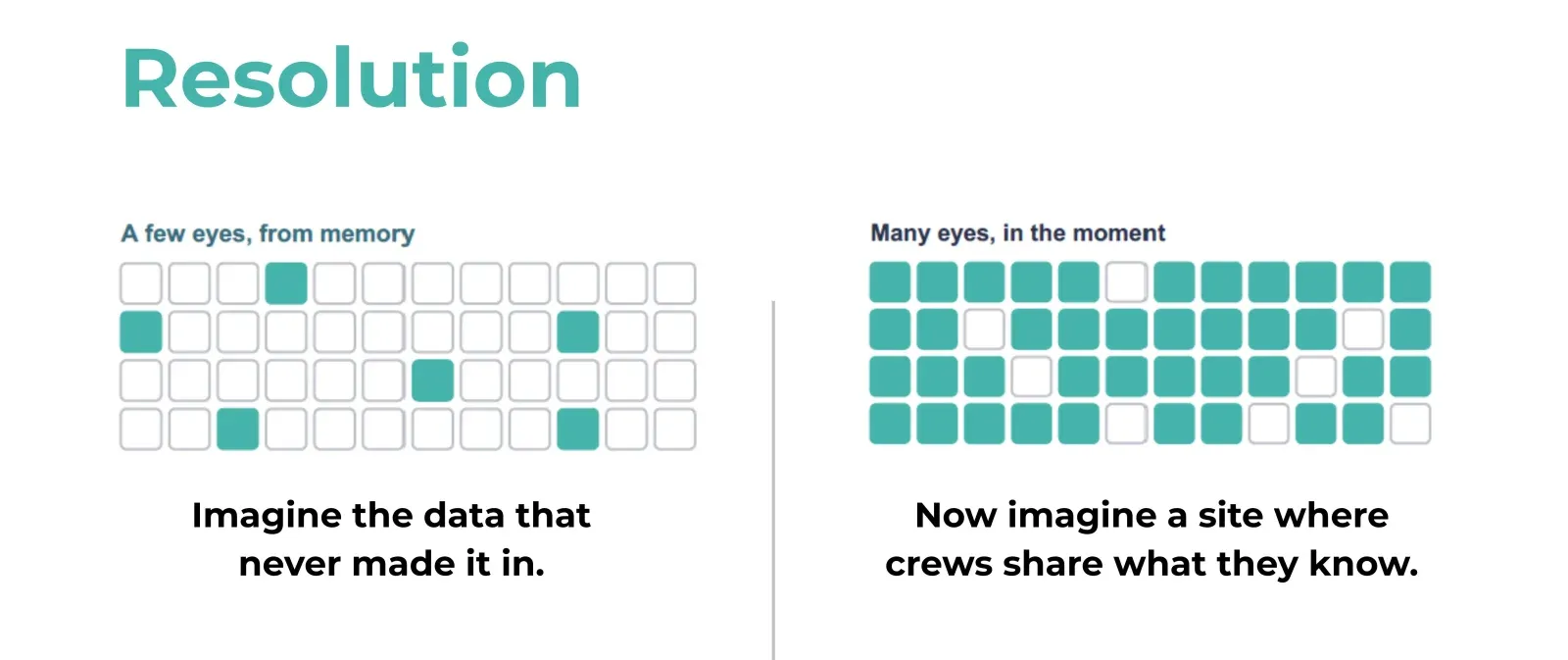
Now picture everyone connected. Foremen, crews, designers, and the super, all contributing to one record, through a text message they already use. This is real and happening now across complex builds. These workflows were built with EllisDon, on their sites, over three years. At UHN Toronto Western, every trade was on Crewscope within eight weeks. No app. No login.
The resolution gets sharper with every person who takes part. Site leaders stay in the field, where they add value. Crews get answers fast. Blockers surface before they become delays. And the data gets recorded without a person typing it.
That is what a richer record gives you. Not more paperwork, but a clearer picture, assembled by the people doing the work.
Frequently asked questions
What are leading indicators in construction safety?
Leading indicators are proactive signals that point to risk before an incident happens, like observation trends, participation, and response times. A hazard that suddenly stops being reported is a leading indicator worth acting on.
Why does a drop in safety reports matter?
Because silence is not the same as safety. When the most frequent hazard goes quiet, it could mean the risk is gone, or it could mean reporting slipped and the risk is still live. The only way to know is to check.
How do you find rare risks in safety data?
They usually hide in the notes, not the categories. A risk like confined space may never be categorised but appear many times in the text. Reading the unstructured notes, by a person or a system, is how it surfaces.
Why keep the hazard, the check, and the closure in one record?
Because structure and follow-through often live apart. When they are split, you can know what the hazard was or that it was closed, rarely both. One record keeps the full story in one place.